
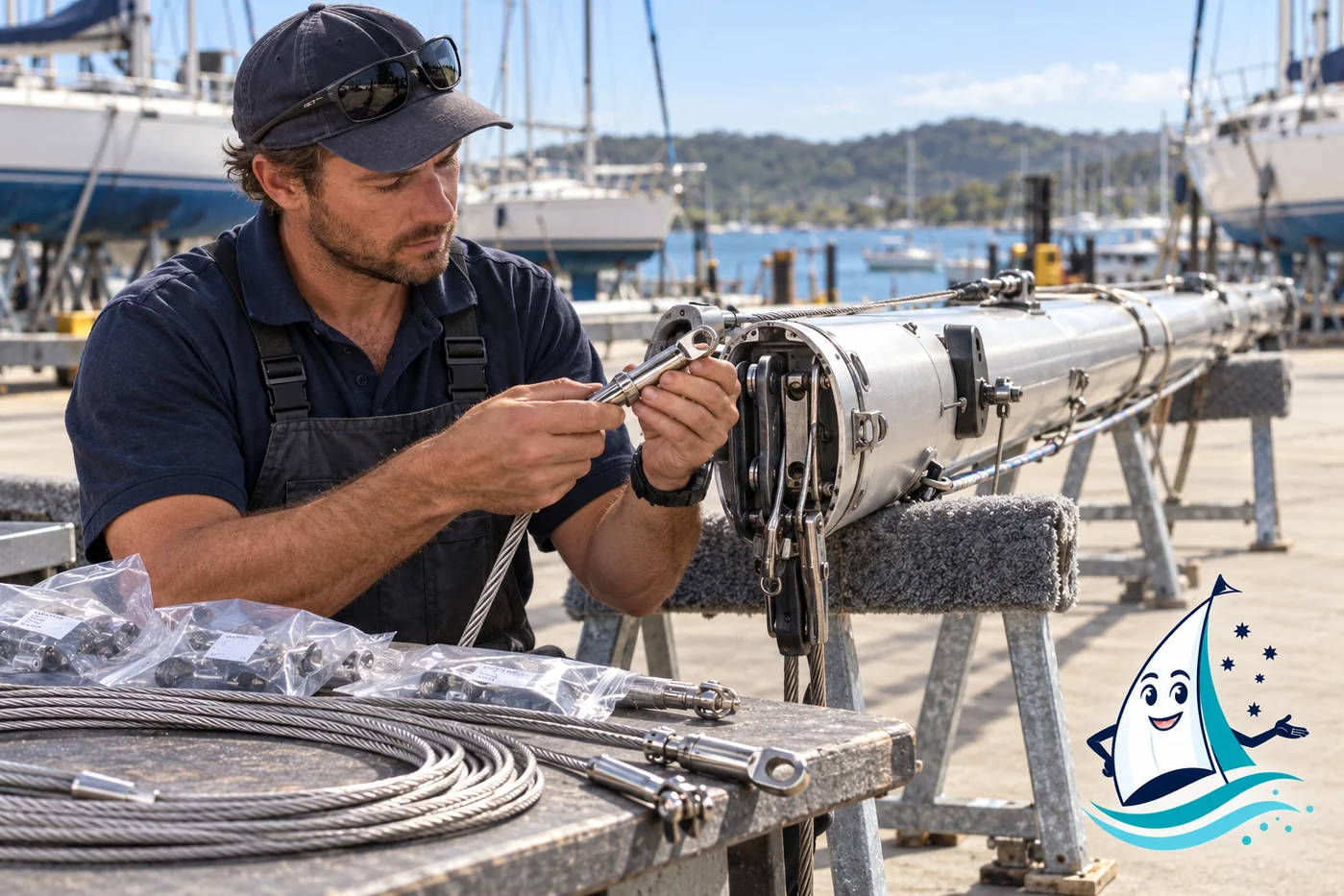
1. Define the need before the product
Collect previous rig reports, replacement invoices and a list of known retained fittings. Ask the rigger to assess the existing system and explain what needs investigation. Separate standing rigging from running rigging in every quote so that “new rigging” has a precise meaning.
2. Compare the credible options
Compare targeted work only where the assessment supports it with a broader renewal project. Ask which terminals, fittings, chainplates, mast components and deck attachments are included or excluded. Discuss whether mast removal offers useful access for other confirmed work.
3. Check the complete installation
- Agree inspection access, including what can and cannot be established without removal.
- Assess attachment and supporting-structure questions with the appropriate professional.
- Coordinate mast wiring, lights, instruments and sail-track work before scheduling a lift.
- Confirm the proposed specification and any changes from the existing arrangement.
4. What the all-in quote should cover
Compare written Australian dollar quotes for the same scope. Ask whether GST is included, how long pricing is valid and what remains an estimate.
- Itemised rig components, mast handling and yard arrangements.
- Inspection and separately approved repair work discovered during access.
- Reassembly, tuning, trial and follow-up specified by the rigger.
Equipment-only pricing is not an installed-cost estimate. Record unknown costs separately and agree approval for variations before work proceeds.
5. Check the handover, not just the invoice
Agree the acceptance and commissioning evidence before work starts. Use the installer’s appropriate test procedure; this is an owner’s handover checklist, not instructions to perform technical tests yourself.
- Get an invoice identifying exactly which components were renewed and retained.
- Collect findings, photographs where available and unresolved limitations.
- Agree tuning and post-use checks, and update the yacht’s rig history.
6. Budget for ongoing ownership
Follow the rigger’s inspection and maintenance schedule for the installation and use. Keep all component records together for future owners, surveyors and insurers.
Common buying mistakes
An inspection date is not a replacement date. Do not assume new wires mean every attachment has been renewed, or change a rig specification without competent assessment.
WORKED PLANNING EXAMPLE
Illustrative decision: a mast-out job reveals that an advertised renewal quote omitted retained fittings. The owner obtains the revised scope and professional advice before approving the additional work.
THE OWNER’S FIELD GUIDE
Work through the decision in detail
Use these discussions before requesting a quote. Bring the yacht’s records, your survey findings and a clear description of the trips you want to make.
OWNER’S FIELD GUIDE · 01
Build a rig history before seeking a replacement price
Collect invoices, previous rig reports, known mast removals and details of any grounding, collision or repair. Separate documented facts from the seller’s recollection. If the history is incomplete, say so plainly when briefing the rigger and surveyor. Uncertainty is a reason to investigate, not a basis for inventing an age.
Ask the rigger what their inspection covers, what requires the mast to be removed and what cannot be established visually. A general yacht survey and a specialist rig assessment have different scopes. Have the professionals explain the boundary so you do not accidentally leave an important part of the purchase or refit unexamined.
OWNER’S FIELD GUIDE · 02
Look beyond replacing the wire
Ask for the proposed scope to distinguish standing rigging from mast fittings, chainplates, attachment structure, running rigging and handling hardware. The condition and accessibility of those related parts can affect the work. Replacing one visible component is not confirmation that every connected component is satisfactory.
If inspection reveals a concern in the deck or supporting structure, agree who will assess it and how the findings affect the project. Avoid asking a rigger to price unidentified structural work as though it were a routine fitting replacement. Record provisional items and the approval process for discoveries.
OWNER’S FIELD GUIDE · 03
Coordinate mast removal with other work
A mast-out period may provide access for inspection and planned work on lights, wiring, aerials, tracks and fittings. Create a list before the mast is removed and ask which jobs sensibly belong in that window. Do not add equipment merely because access is available; each addition still needs a purpose and a compatible design.
Clarify who books the yard and crane, how the mast is stored and protected, and who coordinates removal and reinstallation. Include weather, parts availability and yard scheduling in the plan. The rigging quote and the yard quote should describe the same sequence and responsibilities.
OWNER’S FIELD GUIDE · 04
Keep insurer requirements separate from condition assessment
Ask your insurer or broker directly what evidence they require for the yacht and planned use. Obtain the answer in writing and give it to the rigger. Do not assume a rule quoted by another owner applies to your policy, or that meeting a documentary requirement proves every part is sound.
Equally, a favourable inspection does not automatically satisfy every policy condition. Keep the condition findings, replacement records and insurance correspondence together, with the exact work and dates identified. Discuss uncertainty before setting a departure date or relying on cover for a changed cruising area.
OWNER’S FIELD GUIDE · 05
Agree the inspection and acceptance record
Before work begins, ask what the completed report will identify: items inspected, items renewed, retained components, limitations, follow-up work and the final setup procedure. Request traceable equipment and service records appropriate to the job. Clear records are valuable to you, a future surveyor and a later buyer.
Ask the rigger to explain the required follow-up after the yacht returns to use. The timing and work should come from the professional and installed components. Do not use a general guide as a tension-setting instruction or attempt to resolve unfamiliar rig behaviour by trial and error.
OWNER’S FIELD GUIDE · 06
Make the first sailing period part of the project
Plan suitable initial outings and any agreed professional follow-up rather than treating crane day as the end of the refit. Tell the rigger promptly about unusual noises, movement or handling concerns. Record what you observed and the conditions; avoid offering a confident diagnosis without inspection.
Keep a practical owner inspection routine supplied by the rigger, including what you can observe from deck level and which findings warrant professional attention. A clear routine helps catch changes while maintaining the distinction between owner observations and a specialist assessment.
MAKE A SHORTLIST
Which scope fits your yacht?
Ask the relevant specialist which of these routes is credible for your yacht. Compare the whole result, including the parts you would retain.
PAUSE AND ASK FOR EVIDENCE
Red flags in the upgrade proposal
These are reasons to clarify the scope or seek specialist assessment. They do not establish that a particular product or contractor is unsuitable.
“Rigging done” does not identify the work
Some components may have been replaced while others were retained.
Your next step: Obtain itemised records and ask a specialist to distinguish known work from remaining uncertainty.
A narrow replacement quote is described as a full rig approval
Chainplates, attachments, mast fittings and supporting structure may fall outside that quote.
Your next step: Have the scope and inspection limitations written down and assign any further investigations.
A friend’s insurance requirement is treated as your policy rule
Requirements can differ between insurers, policies and intended use.
Your next step: Ask your own insurer or broker for written requirements and pass them to the rigger.
A mast-out booking is made before the parts and trades align
Storage, access and repeated handling can add time and expense.
Your next step: Create one agreed sequence for the yard, rigger and any electrical or sail-handling work.
ILLUSTRATIVE OWNER SCENARIO
How the decision changes in practice
A buyer receives a listing that says “rigging updated” without an invoice. The surveyor recommends a specialist rig assessment. The rigger distinguishes documented replacements from unknown components and identifies further access needed. The buyer obtains an insurer’s written requirements and prices a coherent scope before committing to a passage. The phrase in the listing becomes a question supported by evidence, rather than an assumption built into the purchase budget.
A fictional planning example, not a report about a particular yacht, owner or contractor.
6 QUESTIONS FOR THIS TOPIC
Standing rigging, mast & deck hardware: FAQs
Does rigging have one universal expiry date?
Do not rely on a universal age rule. Discuss condition, service history, component guidance, intended use and the requirements of your particular insurer with the relevant professionals.
Is a survey enough?
Read the actual survey scope and exclusions. Ask whether a separate specialist rig inspection, mast access or further investigation is needed for your yacht.
Should I change the rig design while replacing it?
A design change needs the appropriate specialist assessment. Do not treat a different size, material or fitting as a simple substitution based only on availability.
What records should I keep?
Keep inspection reports, invoices identifying the work, relevant component details, photographs, follow-up notes and insurer correspondence. Record retained items and unresolved limitations as well as new parts.
How can I keep track of retained fittings after a rigging renewal?
Request an itemised record identifying renewed and retained components, inspection limitations and follow-up recommendations. Keep it with the rig history. This avoids the next owner or contractor interpreting a broad invoice heading as renewal of the entire rig.
What should be agreed before a rigger substitutes a component?
Have the responsible specialist confirm suitability for the specific installation and document the change. Review consequences for related parts, price and timing before approval. Treat a substitution as a design and scope question, not merely a stock-availability decision.
Manufacturer reference
Seldén: technical manuals and assembly references ↗
Consult the current manual for the exact chosen model. This reference illustrates the planning issues; it is not a brand endorsement or confirmation of Australian compliance. Research checked 6 October 2026.
YOUR INSTALLER BRIEF
Prepare your standing rigging, mast & deck hardware enquiry
Saved only in this browser. Print a copy before clearing browser data. These notes stay with this equipment guide on this device; nothing is sent to a contractor.