
1. Define the need before the product
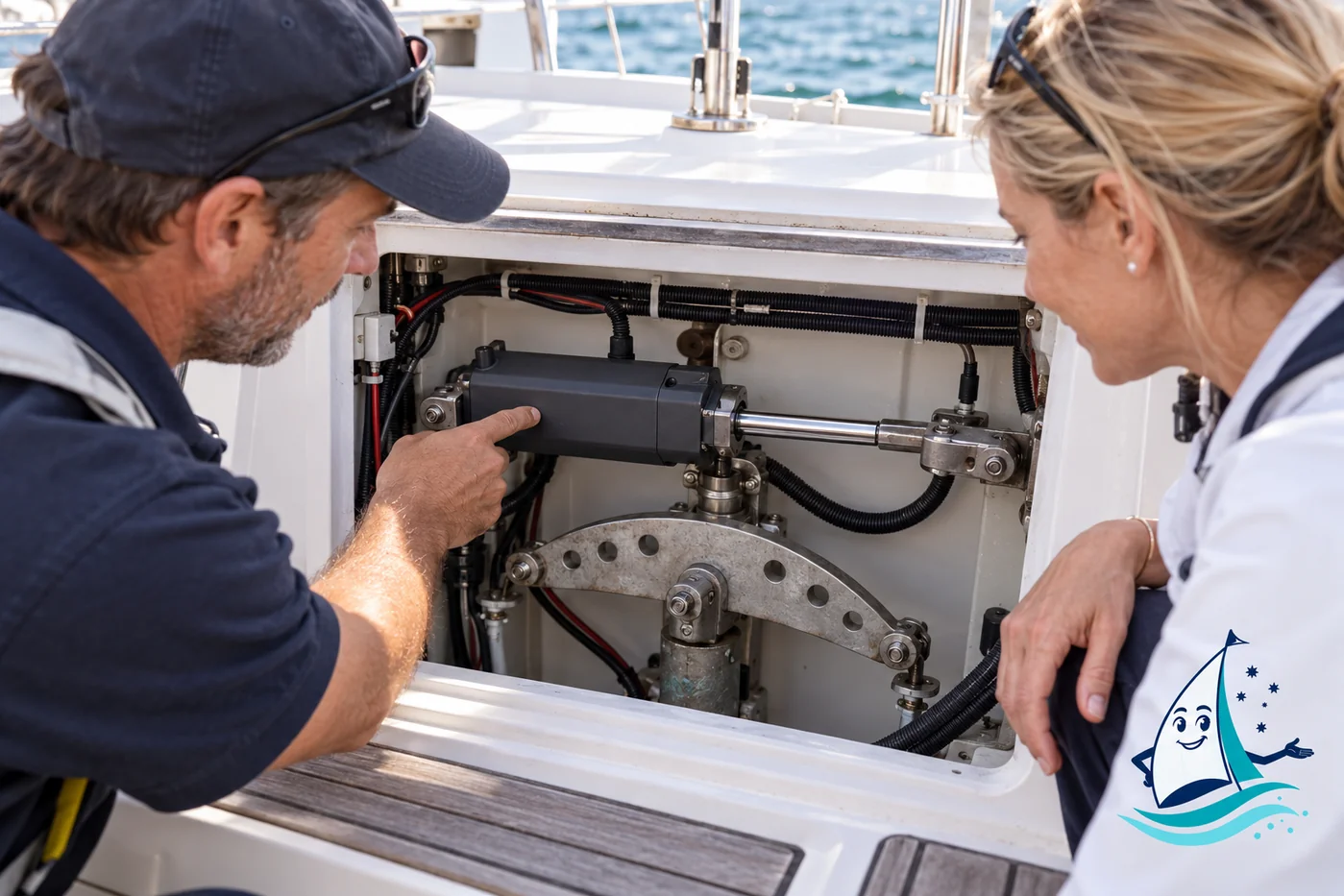
Record the yacht’s loaded condition, steering type, existing drive, normal passages and how the crew uses the pilot. Ask whether a reported steering problem needs mechanical repair before considering new electronics. An autopilot assists steering; it does not keep a lookout or take responsibility for navigation.
2. Compare the credible options
Compare servicing a suitable existing unit, replacing the drive or controller, and fitting a complete new system. Discuss whether the current hardware is supported. Select against the manufacturer’s criteria for the steering arrangement and loaded yacht, rather than a familiar model name.
3. Check the complete installation
- Have drive compatibility, mounting and steering travel assessed.
- Confirm available electrical supply, control interfaces and navigation-data compatibility.
- Discuss access for maintenance and the consequences of a failed component.
- Review how manual and emergency steering remain available.
4. What the all-in quote should cover
Compare written Australian dollar quotes for the same scope. Ask whether GST is included, how long pricing is valid and what remains an estimate.
- Drive, control equipment, sensors and required interfaces.
- Mounting or steering work, cabling, protection and installation labour.
- Commissioning, calibration and trial time, plus crew familiarisation.
Equipment-only pricing is not an installed-cost estimate. Record unknown costs separately and agree approval for variations before work proceeds.
5. Check the handover, not just the invoice
Agree the acceptance and commissioning evidence before work starts. Use the installer’s appropriate test procedure; this is an owner’s handover checklist, not instructions to perform technical tests yourself.
- Have the installer complete the model-specific commissioning procedure.
- Demonstrate disengagement and return to manual steering.
- Trial the agreed functions in suitable conditions and document unresolved behaviour.
6. Budget for ongoing ownership
Follow servicing and calibration guidance. Keep mechanical steering checks separate from software updates. Revisit the setup after significant steering or instrument changes.
Common buying mistakes
Do not use a larger drive to disguise a steering fault or assume a controller swap guarantees compatibility. Budget for the drive and mounting work, not just the display.
WORKED PLANNING EXAMPLE
Illustrative decision: a buyer prices a new pilot display, then discovers the existing drive is the limiting component. The revised proposal covers the whole steering interface and its installation.
THE OWNER’S FIELD GUIDE
Work through the decision in detail
Use these discussions before requesting a quote. Bring the yacht’s records, your survey findings and a clear description of the trips you want to make.
OWNER’S FIELD GUIDE · 01
Define the steering job and the crew’s expectations
Tell the specialist about the yacht’s steering arrangement, loaded cruising condition, normal sailing and intended passages. Explain whether you need occasional relief on short trips or an integrated system for extended cruising. Describe the conditions in which the existing pilot struggles without deliberately recreating a fault at sea.
Make the operating expectation explicit: an autopilot assists steering but does not remove the need for a proper lookout or an attentive crew. Ask which functions the proposed system supports, which information it needs and what the crew must continue to do. Avoid choosing solely from the display size or a catalogue headline.
OWNER’S FIELD GUIDE · 02
Inspect the steering before specifying the drive
Ask for the mechanical steering arrangement and proposed drive connection to be assessed. Play, stiffness, wear or an unsuitable mounting arrangement should not be hidden behind a new electronics purchase. Confirm who owns the steering assessment and any remedial work.
Have the installer select a drive appropriate to the actual yacht and installation, using the manufacturer’s method and relevant vessel information. Nominal length alone is not a complete brief. Ask how the system can be serviced and how the yacht’s normal and emergency steering arrangements will remain accessible.
OWNER’S FIELD GUIDE · 03
Check power, sensors and network compatibility
Provide an inventory of existing instruments, heading information, chartplotter, wind data and power arrangements. Ask exactly which components can be retained and which functions would be unavailable with a mixed installation. Get the answer for the specific models, not just a statement that both use a familiar network name.
Include electrical demand, cable routes, protection, sensor locations and environmental requirements in the design. Coordinate the pilot with battery and navigation projects. A display that communicates on a network does not, by itself, establish a complete and correctly commissioned steering system.
OWNER’S FIELD GUIDE · 04
Price the hidden mechanical work
Request a quote separating the drive, control and sensor equipment from brackets, structural work, wiring, access changes and commissioning. Ask how the installer will confirm the proposed mounting arrangement before final fabrication. Include any work required to restore a locker or panel after installation.
Compare quotes for the same functional result. A lower equipment-only price may exclude the most yacht-specific work. If inspection is needed before a firm price, pay for a defined assessment and use the findings to obtain a credible scope rather than forcing an unsupported fixed quote.
OWNER’S FIELD GUIDE · 05
Plan calibration and a proper handover
Ask which commissioning steps occur at the berth and which require an appropriate on-water session. Agree who supplies the skipper and crew, what conditions are suitable and what happens if the trial must be postponed. The professional should follow the chosen system’s procedure.
At handover, have regular crew practise the normal controls and the documented way to return to manual steering. Obtain a clear explanation of alarms, limitations and modes. Keep configuration and installation records so future servicing does not begin with guesswork.
OWNER’S FIELD GUIDE · 06
Track the outcome across realistic trips
Record behaviour under the kinds of sailing and motoring you actually bought the system for. Give the installer useful descriptions of unexpected behaviour, including operating mode and relevant conditions. Do not try unfamiliar adjustments merely to silence symptoms.
Keep mechanical inspection and general steering maintenance on the ownership schedule. Electronics updates and replacement equipment should be reviewed for compatibility before changes are made. An autopilot refit is complete when the integrated steering result and crew understanding meet the agreed brief.
MAKE A SHORTLIST
Which scope fits your yacht?
Ask the relevant specialist which of these routes is credible for your yacht. Compare the whole result, including the parts you would retain.
PAUSE AND ASK FOR EVIDENCE
Red flags in the upgrade proposal
These are reasons to clarify the scope or seek specialist assessment. They do not establish that a particular product or contractor is unsuitable.
Selection relies only on the yacht’s nominal length
The actual vessel, steering and intended use need to inform the drive and system choice.
Your next step: Provide the relevant vessel information and ask the installer to apply the manufacturer’s selection method.
The pilot is blamed for unresolved steering resistance
A new control system may not address the underlying mechanical issue.
Your next step: Have the steering assessed and define necessary remedial work before final system selection.
The quote excludes the drive mounting
Yacht-specific brackets, supports and access can be substantial work.
Your next step: Request an assessed mounting proposal with responsibility for any structural work clearly assigned.
Calibration and crew handover are optional extras
The installed system may not meet the intended brief without the required setup and familiarisation.
Your next step: Include professional commissioning and the documented return-to-manual procedure in the acceptance plan.
ILLUSTRATIVE OWNER SCENARIO
How the decision changes in practice
An owner selects a new pilot after comparing control screens. An installer’s visit reveals that the drive mounting and an existing steering issue need attention first. The revised quote includes those items, the necessary sensor and a commissioning session. The owner judges the finished project by steering behaviour and a confident crew handover, rather than by whether the new screen switches on.
A fictional planning example, not a report about a particular yacht, owner or contractor.
6 QUESTIONS FOR THIS TOPIC
Autopilot & steering: FAQs
Can I choose by yacht length?
Give the installer the full vessel and steering information and ask them to follow the equipment manufacturer’s selection process. A length range is not a substitute for checking the actual installation.
Will it work with my chartplotter?
Ask which specific features are supported by the exact equipment combination and what additional components are needed. Require more detail than a generic compatibility claim.
Can I skip the sea trial?
Agree the manufacturer-required commissioning and an appropriate professional handover. If an on-water component is required, make it a scheduled part of the scope.
Does it reduce the need for crew attention?
It is a steering aid. Plan proper lookout, navigation and crew responsibilities independently, and understand the system’s limitations.
What information helps an installer investigate erratic pilot behaviour?
Record the operating mode, relevant conditions, displayed alarms and a clear description of what happened. Do not create an unsafe trial to reproduce it. Ask the installer what additional observations or professional checks will distinguish a configuration issue from a mechanical or equipment problem.
Should my regular crew attend the autopilot handover?
Yes, arrange for them to learn the supported modes, limitations and documented return to manual steering. Ask each person to demonstrate understanding in suitable conditions. Familiarity should not depend on one owner remembering an explanation given on installation day.
Manufacturer reference
Raymarine: autopilot drive options ↗
Consult the current manual for the exact chosen model. This reference illustrates the planning issues; it is not a brand endorsement or confirmation of Australian compliance. Research checked 6 October 2026.
YOUR INSTALLER BRIEF
Prepare your autopilot & steering enquiry
Saved only in this browser. Print a copy before clearing browser data. These notes stay with this equipment guide on this device; nothing is sent to a contractor.