
The short answer
A useful trial has an agreed purpose, competent operators and a record of its limitations.
What you’ll work through
Set the scope before booking
Agree the trial and haul-out with the owner and appointed professionals. Establish who operates the yacht, who attends, what equipment can be demonstrated and who pays each cost. Clarify cancellation arrangements and how weather or access problems affect the buying timetable. A trial should answer planned questions, not become an informal pleasure sail.
Provide records and known concerns beforehand. If the engine mechanic needs to attend or the sailmaker wants observations under sail, coordinate this explicitly. Allow time for checks without rushing between a lift booking and a tide-dependent departure. Do not put a buyer with unfamiliar equipment in charge of a test beyond their competence.
Prepare for the haul-out
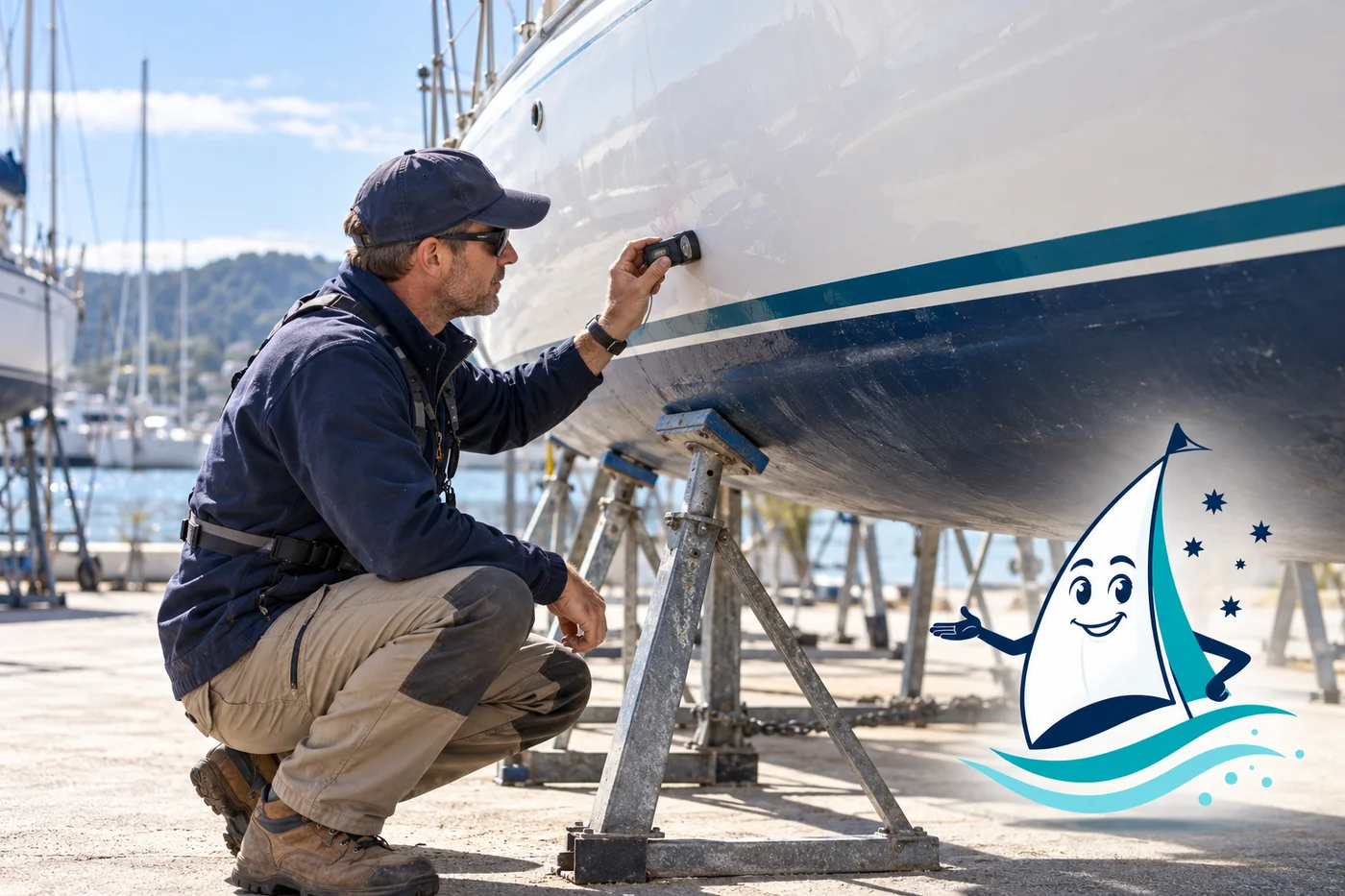
Give the yard accurate dimensions, displacement information and construction details requested for lifting. Let the yard and surveyor determine appropriate arrangements. Confirm access, cleaning and any work that must be scheduled separately. Buyers should stay clear of lifting operations and follow the yard's directions.
Ask the surveyor to record what is observed and any areas still inaccessible. An antifouling job and a condition inspection have different purposes; fresh coating does not replace an inspection record. If additional investigation is recommended, establish what permission, time and cost it requires before proceeding.
Observe under power
Follow the mechanic's agreed procedure for starting, operating under appropriate load and recording relevant behaviour. Note conditions and any limitations. Ask for an explanation of concerns after the operator and specialist have completed the relevant task rather than distracting them while manoeuvring.
Include steering and propulsion behaviour, not just whether the engine starts. Record equipment that is inoperative or cannot be demonstrated. A short successful run is useful evidence about that run, but it cannot prove every future operating condition or eliminate the need to follow service recommendations.
Observe under sail
In suitable weather, have a competent operator demonstrate the working sail plan, reefing and furling arrangements. Observe whether the controls and loads are manageable for your regular crew. Ask about any difficulties without assuming they must come from defective equipment; technique, setup and maintenance can all be relevant.
If a sail is not hoisted or the wind prevents a meaningful demonstration, record that. Do not substitute photographs from a previous owner's ocean passage for current evidence. Decide whether another opportunity or a loft inspection is needed before accepting the uncertainty.
Close the loop after the day
Collect written findings and a list of untested items. Separate new observations from previously known issues so you can discuss each clearly with the seller. Ask the specialists what requires further investigation and what can be priced now. Avoid demanding an immediate purchase decision while still sorting unfamiliar information.
Use the findings chapter and budget worksheet together. If the evidence changes your decision, follow the terms and deadlines of the actual agreement. A constructive conversation is easier when the concern, supporting report and proposed next step are specific.
Give every trial objective an owner
Prepare a short schedule with the person operating the yacht and attending specialists. Link each objective to a question: machinery operation, steering response, sail handling, reefing arrangements or equipment function. Let the competent operator and professionals choose safe conditions and methods. A trial should never become a pressure test beyond the yacht’s condition or the crew’s ability.
Record conditions and limitations alongside observations. If weather prevents a sailing demonstration or access prevents a machinery check, mark it outstanding. Arrange the next step through the contract process rather than treating a pleasant outing as acceptance. Ask for written findings from each specialist and identify overlap or gaps before the inspection deadline expires. One person’s attendance does not mean they assessed every system.
Make the survey day log useful afterwards
Bring the agreed scope, inventory and previous questions. Keep a record of conditions, access limitations, demonstrations and documents supplied. Let the professionals conduct their inspections; use your notes to connect their findings to the decisions you need to make. Confirm how any newly identified concern will be investigated rather than treating the day’s end as automatic completion.
Ask which operating tests were achieved and which were deferred. A short trial in sheltered water cannot demonstrate every condition you might encounter. Arrange any follow-up through the responsible specialist and maintain the relevant purchase deadlines. After the report arrives, reconcile it with the inventory and your own notes before requesting repair quotes or revising an offer.
Put the advice to work
Build a trial record that survives the day
A trial is useful when everyone knows what it is meant to demonstrate. Prepare the record before departure; the responsible skipper and specialists decide whether conditions and operation are appropriate.
| Check | What you have | What to do with it |
|---|---|---|
| Before | Who operates the yacht? | Record the skipper, permissions, insurance arrangements and the agreed scope with the relevant parties. |
| During | What was demonstrated? | Record the conditions, systems operated and specialist observations, without attempting tests outside your competence. |
| Limitations | What could not be demonstrated? | A headsail left furled or machinery not tested under the agreed conditions remains an unanswered item. |
| After | What closes the gap? | Identify the professional, follow-up test and report needed; connect the timing with the purchase agreement. |
The decision: An uneventful short outing does not establish offshore readiness. Treat the trial record as evidence for a defined purpose, not a universal pass.
Further reading: AIMS: pre-purchase versus insurance surveys ↗. The example is editorial interpretation, not a finding about a real yacht or a professional sign-off.
Follow a complete Buyer’s File →FROM OBSERVATION TO ACTION
What the answer means
| What you encounter | What it means | Your next action |
|---|---|---|
| No opportunity to sail | Some objectives remain incomplete. | Record limits and decide how to resolve them. |
| Specialist cannot attend | Important observations may lack the intended assessment. | Rearrange or obtain an agreed alternative. |
| Inspection deadline is close | Unresolved work may have contractual consequences. | Seek advice and any necessary written variation in time. |
A BUYER’S DECISION
Work through an example
Illustrative trial: the yacht motors satisfactorily during the agreed machinery checks, but light wind prevents a meaningful assessment of sailing behaviour. The record says exactly that. The buyer asks which sailing questions remain material and whether another demonstration or specialist inspection is needed, rather than writing “sea trial passed”.
6 QUESTIONS FOR THIS TOPIC
Haul-out and sea trial: organise useful evidence: FAQs
Should I attend?
Discuss attendance with the surveyor. It can help you understand the yacht, provided you do not obstruct the assessment or mistake attendance for technical expertise.
Who should operate the yacht?
Agree this beforehand with the seller, operator and relevant cover arrangements. The person must be competent for the yacht and planned conditions.
Who arranges the haul-out and pays the yard?
Agree booking, payment, access and cancellation responsibilities before the survey date. Confirm the surveyor’s availability alongside the yard and seller. Do not assume a survey fee includes lifting, storage or a separate machinery assessment.
What if weather prevents the agreed sea trial?
Discuss a revised date and the effect on transaction deadlines through the agreed sale process. Ask the professionals what can be completed meanwhile and what remains unassessed. Do not silently substitute a shorter or different trial and treat the original scope as complete.
How can I make the survey day useful without interrupting the surveyor?
Agree beforehand when you can observe, ask questions and receive an initial explanation. Bring your concern list and respect the professional’s working process. Use the written report and follow-up discussion to resolve conclusions rather than relying on remarks overheard during inspection.
Should systems be demonstrated before or after haul-out?
Ask the surveyor and other specialists to set the sequence appropriate to their scope and access needs. Coordinate it with the operator and yard. A shared agenda helps avoid missing demonstrations because the yacht is no longer in the condition or location required.
Before you move on
Your questions, answered
Tick a question when you have recorded an answer or assigned a follow-up. A tick records your progress; it does not certify the yacht.
Saved only in this browser. Print a copy before clearing browser data.
0 of 4 questions addressed
Record your evidence in the buyer’s notebook →
Sources and further reading
Editorial research, not a professional sign-off. Confirm current requirements and vessel-specific conclusions with the responsible authority or specialist.
YOUR AUSTRALIAN SUPPORT CREW
Find the right help on YouSail.
Start with the job you need done, then discuss experience, scope and availability directly.
INDEPENDENT PRE-PURCHASE ASSESSMENT
Marine surveyors ↗Commission an independent assessment.
Explore the YouSail directory →Discuss machinery assessment and service scope.
Explore the YouSail directory →Directory links checked 6 October 2026. Listings are starting points for enquiries, not endorsements or confirmation of current qualifications, services or availability. Choose and appoint your own independent professionals.