

The short answer
A well-briefed, independent survey is a decision tool, not a formality.
What you’ll work through
Construction, general condition and limitations
Engine, installation and propulsion
Mast, rig and sail-handling equipment
Working sails, repairs and replacement scope
Select experience that fits the yacht
Ask about relevant construction, vessel size, sailing-yacht experience and the type of assignment. A professional experienced with one kind of vessel may not be the best fit for an unusual construction or extensive modification. Request a sample report, an explanation of qualifications and appropriate professional insurance, and clarification of the services offered.
Compare scope rather than only price. Does the proposed work include time afloat and ashore, a trial, accessible structure and relevant systems? What is excluded? Which machinery, rigging, electrical or material assessments require separate specialists? Establish this before booking so you do not discover gaps after paying the yard.
Appoint the surveyor for your purpose
Explain that this is a pre-purchase decision and describe your intended sailing. An insurer's requested condition report or a valuation may have a different purpose and scope. An old report commissioned by the owner is useful history, but ask whether and on what terms you can rely on it. Do not assume it is current or transferable.
Provide the advertisement, inventory, repair history and your questions. Tell the surveyor what matters without telling them what conclusion you want. Their job is independent assessment, not finding enough faults to justify a predetermined discount or reassuring you because you have fallen in love with the yacht.
Agree access and limitations
Confirm who obtains the owner's permission, clears lockers, arranges the lift and prepares the boat. Ask what is non-destructive and what further access would need separate consent. Discuss fixed linings, tanks, mast inspection, underwater areas and equipment that cannot be operated. Make sure limitations will be recorded in the report.
Coordinate the mechanic and rigger explicitly. The general surveyor may observe machinery or rigging without undertaking the specialist work you assumed was included. Ask each professional who is covering the connections between systems, such as chainplates and surrounding structure or the engine and drive installation.
Plan the day and the report
Arrange realistic yard and trial slots and establish cancellation arrangements. Ask whether attendance by the buyer is helpful and how questions should be handled without interrupting inspection. Request photographs and an organised explanation of findings, together with any recommendations for further investigation.
Before the contract's decision deadlines, leave enough time to receive and understand the report and obtain important repair quotes. A verbal “mostly fine” at the end of a long day should not replace the written scope, findings and exclusions. If a contractual deadline is approaching, deal with it through the agreed process and obtain advice as needed.
Use the findings responsibly
Ask the surveyor which items affect immediate use, which need investigation and which are normal maintenance. Seek clarification of unfamiliar terms. Where cost or remaining life cannot be estimated reliably, obtain the appropriate specialist opinion instead of translating uncertainty into a precise number yourself.
A survey reduces uncertainty within its agreed scope. It does not demonstrate every concealed component or guarantee future reliability. Your decision should combine the findings, your intended use, practical repair options and available budget. Keep the report with the yacht's records if you proceed and turn recommendations into a dated action list.
Choose the assessment before choosing the person
Ask whether you need a pre-purchase condition assessment, an insurer-requested report, a valuation, specialist investigation or a combination. AIMS publishes guidance distinguishing pre-purchase and insurance surveys. Have the proposed surveyor explain the purpose and deliverable in their own engagement rather than assuming the label survey describes a standard package.
If you need the result for an insurer as well as your purchase, confirm the insurer’s requirements first. A useful buying report is not automatically accepted for every insurance purpose. Equally, a report that satisfies an insurer’s particular request may not answer all your buying questions. Commission the scope that supports your decision.
Check credentials without mistaking a badge for a guarantee
Ask which qualifications, memberships or accreditations the surveyor holds, what they relate to and how you can verify them. AMSA’s accredited marine surveyor scheme addresses domestic commercial vessel work; its listing is not a blanket quality ranking for every recreational pre-purchase assignment. Check the relevance of any credential to the work you are commissioning.
AIMS lists survey categories and explains that category information is supplied by members. Use professional directories to identify candidates, then ask for evidence of relevant work. Neither membership, a directory position nor a website’s Top Surveyors label removes the need to assess experience, scope, independence and reporting.
Match experience to construction and known history
Describe the yacht’s construction accurately, including any core material, metal construction, timber work, major repair or modification you know about. Ask the candidate about comparable vessels and the assessment methods they would propose. You are looking for a reasoned approach to this yacht, not a list of every type of vessel they have encountered.
For known grounding, corrosion, water ingress or extensive alteration, ask what additional expertise or access may be needed. A strong response can include a clear limit to the surveyor’s own work and a suitable specialist referral. Be wary of treating a promise to inspect everything as stronger evidence than a carefully explained scope.
Establish independence and professional accountability
Ask about current or recent involvement with the seller, selling broker, yacht, repair yard and proposed contractors. A recommendation is not automatically a conflict, but the relationship should be transparent so you can assess it. Ask whether the surveyor receives referral payments or expects to benefit from repair work they recommend.
Confirm the contracting business, the person who will attend and the person responsible for the report. Request evidence of appropriate professional indemnity and public liability insurance and ask what it covers for the engagement. These insurances address different risks; do not infer suitable protection from a general statement that a business is insured.
Read an anonymised sample report before booking
Ask for a sample that respects previous clients’ privacy. Look for a clear vessel identity, inspection date, scope, access limitations, photographs tied to locations, findings and priorities. The report should allow you to distinguish an observed condition, a concern requiring investigation and a recommendation. Length or the number of photographs alone does not establish usefulness.
Choose one sample finding and ask how it would lead to your next decision. Could a contractor understand what needs investigation? Is the limitation obvious? Can you tell which matters affect intended use? A report full of broad satisfactory ticks may leave you uncertain about what was actually inspected, so clarify the reporting method before appointment.
Agree a scope that names exclusions and interfaces
List afloat inspection, haul-out, trial attendance, accessible structure and systems, and the precise machinery and rig work proposed. Identify methods or tests included and ask what each can establish for this construction. Non-destructive access should not be confused with proof of the condition of every concealed area. Obtain permission and a separate scope for additional access where needed.
Assign the interfaces: chainplates and supporting structure, engine and drive, electrical installation and battery conversion, repaired keel and surrounding structure. Ask each professional where their work stops. A yacht can have several competent specialists involved and still have a gap if everyone assumes somebody else assessed a connection.
Compare the total investigation cost and delivery time
Request an itemised scope and clarify whether GST, travel, yard fees, wash-down, trial attendance, specialist reports and follow-up are included. Record cancellation and rescheduling arrangements. If access is inadequate on the day, ask how that affects the report, fee and return visit. Compare quotes for equivalent outcomes rather than dividing a fee by yacht length.
Set a report date that leaves time to read it, ask questions and obtain important work estimates before your transaction deadlines. Ask how an urgent concern found during inspection will be communicated. Do not build the buying schedule around the assumption that a detailed written report will arrive immediately after the yacht returns to its berth.
Evaluate the response, not just the quotation
Send the same factual brief to a shortlist of suitable surveyors. Compare whether they ask relevant follow-up questions, explain limitations, discuss specialists and give a realistic schedule. A very fast booking is convenient, but should not outweigh an unexplained scope or poor fit for the yacht. Record why you selected the person you appoint.
Before confirming, read the terms of engagement, report-use provisions, fees and any limits on reliance or liability. Obtain legal advice about terms you do not understand. Agree a follow-up conversation after the report and what happens if new access or evidence becomes available. A well-chosen engagement gives you a usable assessment and a clear path for unresolved questions.
Compare the written deliverables before the fee
Ask two candidates to quote against the same vessel, intended use and access plan. Compare attendance, haul-out inspection, trial involvement, report turnaround and exclusions. A lower price may describe a smaller job rather than better value. Ask how urgent findings are communicated and when the full written report will arrive relative to your contractual decision date.
Review a suitably anonymised sample report for clear photographs, locations, limitations and actionable recommendations. Ask how the surveyor approaches previous repairs and model-specific concerns. Relevant experience matters more than a broad directory category. Your appointment should leave you knowing what will be assessed, what will not, and which further specialists may be needed.
THE SURVEY IS A PROCESS, NOT A TICK BOX
From the first brief to an informed decision.

01 · Agree the scope
Give your surveyor the listing, intended use, repair history and viewing notes. Confirm access, exclusions, specialist work and the report deadline.
Read the detailed guide →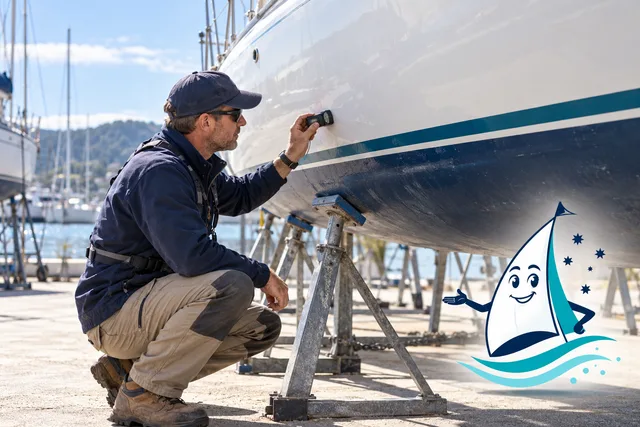
02 · Inspect with purpose
Coordinate haul-out and the agreed trial. Record inaccessible areas and incomplete checks so they remain visible in the purchase decision.
Read the detailed guide →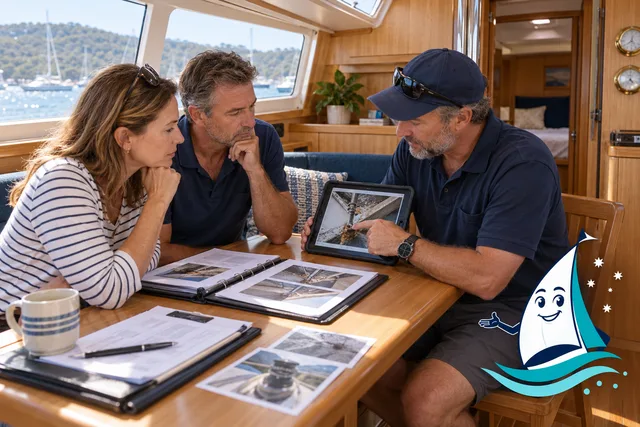
03 · Understand the findings
Ask what each significant finding means, who should investigate or repair it, and what evidence will show the work is complete.
Read the detailed guide →AI-generated illustrations. These scenes do not depict the listed survey businesses or evidence about a real yacht.
Put the advice to work
Compare the appointment, not the badge
A useful enquiry describes a 38-foot fibreglass cruising yacht, its location, intended coastal use and the documents already available. Send the same brief to each candidate so their replies describe the same job.
| Check | What you have | What to do with it |
|---|---|---|
| Purpose | “Insurance survey available” | Ask for a buyer-commissioned scope and explain how you intend to use the report. A report prepared for another party may answer a different question. |
| Access | “Hull inspected” | Was it afloat or ashore? Which internal areas were accessible? Ask how exclusions will be recorded and followed up. |
| Specialists | “Engine checked” | Establish whether this means visual observations, an operating trial or a separately commissioned machinery assessment. |
| Deliverables | “Report supplied” | Ask for an anonymised sample, expected delivery date, priorities, photographs and a process for clarifying findings. |
The decision: Before appointing anyone, resolve scope, independence, access, report use and timing in writing. An inexpensive inspection that leaves your main questions unanswered is not directly comparable to a broader engagement.
Further reading: AIMS: pre-purchase versus insurance surveys ↗. The example is editorial interpretation, not a finding about a real yacht or a professional sign-off.
Follow a complete Buyer’s File →PUT THE DETAIL TO WORK
Interview surveyors using the same brief
Use evidence to compare candidates. This is not a ranking or a pass/fail certification. A gap should prompt clarification or another suitable candidate, not be hidden by a high score on unrelated strengths.
| Selection point | Ask the candidate | A useful answer contains |
|---|---|---|
| Relevant experience | What comparable sailing yachts and construction have you assessed? | Specific relevant experience and a reasoned approach to known concerns. |
| Independence | Have you worked for the seller, broker or yard, or could you benefit from recommended repairs? | Clear disclosure and an engagement you can evaluate independently. |
| Exact scope | What happens afloat, ashore and on trial? What needs a separate specialist? | Written inclusions, exclusions, access limits and named interfaces. |
| Report quality | May I see an anonymised example and discuss one finding? | Located findings, photographs, limitations, priorities and intelligible next steps. |
| Professional arrangements | Who attends, who signs, and what insurance and terms apply? | Identified people and business, relevant evidence and readable engagement terms. |
| Complete cost and timing | Which additional fees or visits are possible, and when will the report arrive? | Comparable scope, GST treatment, logistics, cancellation terms and time for follow-up. |
Australian owner-planning guidance. Sources checked 6 October 2026 and listed below. Policy terms and transaction circumstances need individual confirmation; this guide does not select insurance or provide a legal opinion.
YOUR DECISION RECORD
Prepare your next professional conversation
Saved only in this browser. Print a copy before clearing browser data. These notes are not submitted to a provider or adviser.
FROM OBSERVATION TO ACTION
What the answer means
| What you encounter | What it means | Your next action |
|---|---|---|
| A short insurance report is supplied | Its purpose and inspection scope may differ from your purchase needs. | Read it as background and appoint your own appropriate assessment. |
| Very quick turnaround promised | Check what inspection and reporting are actually included. | Agree scope before comparing delivery speed. |
| Specialist issues excluded | Exclusions may leave decision-critical questions open. | Coordinate the relevant trade before deadlines. |
A BUYER’S DECISION
Work through an example
Illustrative enquiry: “We intend local coastal cruising. The yacht has a documented repair near the keel and inaccessible linings around one bulkhead. Can your proposed scope assess these areas, what further access may be needed, and what would require a separate specialist?” This gives a surveyor more useful information than asking only for a price per foot.
6 QUESTIONS FOR THIS TOPIC
Choose and brief your marine surveyor: FAQs
Can I use the seller’s old survey?
Use it to identify history and questions. Ask about reliance and commission current independent work appropriate to your purchase.
Does a survey guarantee there are no faults?
No. Read access limits, inspection methods and exclusions. Ask what uncertainty remains and how it affects your intended use.
Which experience should I look for in a yacht surveyor?
Ask about comparable sailing yachts, the construction material, the type of survey you need and any known concerns. Request an explanation of report scope and limitations. General marine experience is useful, but the engagement should fit the vessel and buying decision.
How do I check a surveyor’s independence?
Ask about relationships with the seller, broker, yard or anyone paid to repair or sell the yacht. Discuss potential conflicts openly and agree who is commissioning the report. Independence is something to establish through the engagement, not infer from a directory listing.
What should I send before the surveyor provides a quote?
Send the listing, yacht particulars, location, construction, intended use, available records and your unresolved concerns. Explain deadlines and likely access. A useful brief helps the surveyor identify exclusions and any separate machinery or rig assessment needed.
Can I compare survey quotes just by their total price?
Compare access, haul-out attendance, trial involvement, reporting, exclusions, travel and follow-up as well as fees. Ask what you will receive and when. A cheaper quote may be a different service, so align the scope before comparing totals.
Before you move on
Your questions, answered
Tick a question when you have recorded an answer or assigned a follow-up. A tick records your progress; it does not certify the yacht.
Saved only in this browser. Print a copy before clearing browser data.
0 of 5 questions addressed
Record your evidence in the buyer’s notebook →
Sources and further reading
- Condor Marine: survey scope and sea trials ↗
- AIMS: pre-purchase and insurance surveys ↗
- AIMS: survey categories and directory limitations ↗
- AMSA: accredited surveyors for domestic commercial vessels ↗
Editorial research, not a professional sign-off. Confirm current requirements and vessel-specific conclusions with the responsible authority or specialist.
YOUR AUSTRALIAN SUPPORT CREW
Find the right help on YouSail.
Start with the job you need done, then discuss experience, scope and availability directly.
INDEPENDENT PRE-PURCHASE ASSESSMENT
Marine surveyors ↗Commission an independent assessment.
Explore the YouSail directory →Discuss machinery assessment and service scope.
Explore the YouSail directory →Directory links checked 6 October 2026. Listings are starting points for enquiries, not endorsements or confirmation of current qualifications, services or availability. Choose and appoint your own independent professionals.